
As a speech pathologist at Emerson School, Ana Roknic has spent the past three years developing and implementing reading decoding techniques based on the principles of Multisensory Structured Language (MSL), specifically for an intellectual disability setting.
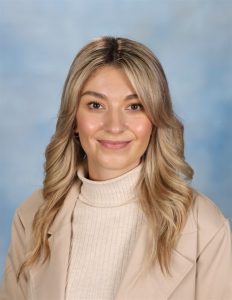
Speech pathologist Ana Roknic
“Historically, there has been a distinct lack of research or available data on MSL interventions for students with intellectual disabilities, with many programs focused more on dyslexia,” Ana says. “I became curious to see if MSL could be successfully adapted to an environment such as Emerson. The results thus far have been overwhelmingly positive.”
When Lisa Mouncer was appointed as Literacy Coordinator at Emerson at the start of 2025, she wanted to build on the work Ana had already begun in the MSL intervention area. Together, they developed and implemented the Comprehensive Literacy Intervention Program (CLIP), an all-encompassing program based on MSL principles, that provides a teaching framework with a focus on routine, structure, and repetition.
CLIP allows for intervention in the classroom, with Lisa and Ana collaborating to develop assessment tools, lesson plans and teaching scripts based on use of sound decks, supports such as individual student whiteboards and markers, and even Matchbox™ cars to help make learning letter sounds fun yet meaningful. The duo also provides mentoring plus classroom demonstrations, to upskill teachers and build their confidence in how to deliver the program.
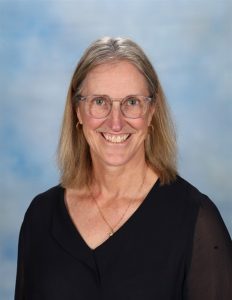
Literacy Coordinator Lisa Mouncer
“This approach enables students to receive appropriate support in the classroom and allows the Student Services team, including Ana, to work with more complex referral cases,” Lisa says.
Prior to CLIP’s introduction, Lisa says there were a range of Literacy systems and programs in place across different parts of the school, creating a lack of consistency in approach.
“CLIP’s whole-school approach provides consistency in process and language across all year levels at the school, while still allowing for students of varying intellectual needs and abilities,” she says.
Since CLIP has been in place at the school, assessment data shows a significant improvement for students across a range of benchmarks, including letter–sound knowledge, open and closed syllables, silent-e words, and common digraphs.
“Our pre- and post-assessment data suggests that structured, multisensory, high frequency intervention can effectively strengthen foundational decoding skills for students with mild intellectual disabilities,” Ana says.
“This has been the case no matter the students’ starting point. In the space of two years, we are seeing adolescents who previously had not mastered letter sounds and were considered completely unable to read, now learning morphology, borrowing books from the library, and beginning to read independently.”
A notable marker of the program’s success has been a lack of regression in students’ reading ability after school holiday breaks. Prior to CLIP, there often would be deterioration in skill level post-holidays.
“Students are now returning from their holiday breaks and performing at the same reading level at which they finished the previous term,” Ana says. “Teaching one-to-one correspondence of letter to sound, with progress monitoring after every session, has proven very successful for our students in their journey toward learning to read.”
Ana says a focus on frequency and dosage is key to improving student outcomes. “The use of sound decks to increase frequency and dosage is especially useful in areas where there is an identified gap in a student’s knowledge. MSL is highly individualised, and increased repetitions on gaps in knowledge have led to significant improvements for all participants in the program.”
Ana’s research into MSL interventions in the intellectual disability setting is attracting notice from industry peers. She was recently invited to present a case study of early decoding outcomes from the Emerson program at the Dyslexia-SPELD Foundation (DSF) Language, Literacy and Learning Conference in Fremantle, WA, in early May 2026.
Both Ana and Lisa are proud of what Emerson School has achieved in reading decoding initiatives, but Lisa notes that CLIP is an evolving program and process. She continues to develop the program and is working closely with one of the school’s occupational therapists, to look at how to incorporate handwriting into the program.
“The ultimate aim is to support improved literacy, independence, and long-term educational and life outcomes for our students,” Lisa says.
Ana’s background
Ana came to speech pathology via a circuitous route. She was undertaking Honors in Biochemistry at Monash University, had just received a scholarship to start a PhD in Biomedicine, and was working as a disability support worker, when her client inspired her to pivot and switch her studies.
“I’m delighted that I’ve ended up working at Emerson—the very school my client attended as a student,” Ana says. “There’s a pleasing symmetry in the situation.”
Ana’s position at Emerson is diverse and multi-faceted, reaching well beyond CLIP and MSL interventions. She supports students with language development, particularly in Junior levels where the focus is on oral, play and social development, as well as speech sound disorders, stuttering, and ways to support and improve communication.
Her role in the Middle and Senior School levels is focused more on developing students’ decoding skills.
Ana also established and now runs the Speech Pathology Assistant program at Emerson School. So far, six ESO staff have been upskilled in specialised areas including literacy and language to support her to deliver intervention to a larger cohort of students.
As part of the Student Services team, Ana is also involved in providing evidence for Disability Inclusion Program (DIP) meetings, assisting families with NDIS applications, provision of autism assessments, development of strategies and resources to support classroom staff, and receives referrals for more complex cases.
Lisa’s background
Lisa can’t remember a time she didn’t want to teach children with special needs. She references a book from her first year of school in which she stated she wanted to be an Olympian and a Special Education teacher.
“I may not have made it to the Olympics, but I’ve always worked in special education settings, even doing work experience in Year 10 at a special school,” she says.
Lisa joined Emerson in 2004, and in her 22 years with the school has worked across all areas including sport, cooking, cyber safety, art, social skills and as a classroom teacher.
To prepare for her role as Head of Literacy at Emerson, Lisa completed courses in Multisensory Structured Language, Cued Articulation, and Talk for Writing, the latter based on the use of spoken activities in learning to read and write.
Lisa also works for the Victorian Curriculum and Assessment Authority (VCAA) as a Group Leader for NAPLAN Writing Markers. She commenced in this role in 2005 as a NAPLAN Writing Marker and was promoted to Group Leader in 2018. Since then, she has overseen teams of NAPLAN Writing Markers each year. This role is undertaken annually over a six-week period after school hours and on weekends.
[interviewed May 2026]
Photo credit: “Reading” photo by Aaron Burden on Unsplash