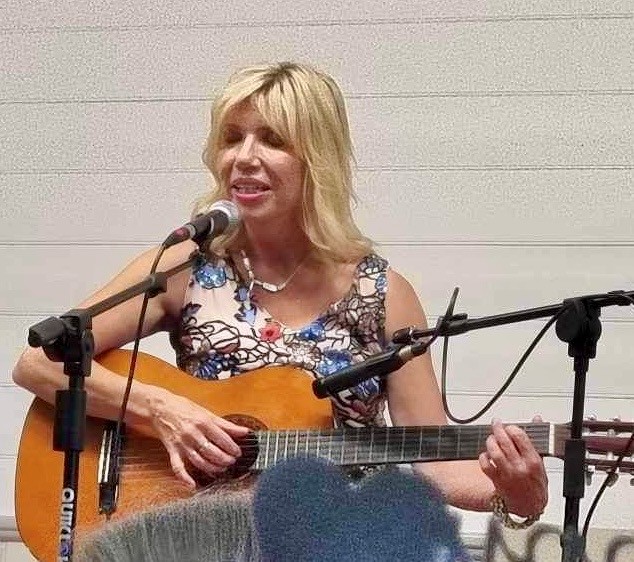
Music at Emerson has been described by one staff member as a transformative force both personal and universal, where no skill level is too high or too low to become involved in an activity that reflects the whole human experience. Margaret Orr is both a trained Opera Singer, having sung with Opera Australia and Vic Opera, and a music therapist. She has used music therapeutically in palliative care and early childhood education. She says the music program at Emerson School helps shift students’ self-perception from being “a student with special needs” to being recognised as a musician or a performer.
“I love that the program at Emerson is intentionally diverse and dynamic,” Margaret says. “Students can participate at a level that is meaningful to them as individuals, but in a way that also becomes meaningful to the wider community. Individuals come with their own complex histories, and music by its very nature has layers and complexities that can assist in making connections, not only for each student individually, but also for the collective.”
Many of the students at Emerson are from disadvantaged or difficult backgrounds, and the exposure to music has created significant “real-world” experiences that support social, emotional and cognitive growth.
“The students can enter areas of music they have not previously been exposed to, such as opera, for example, and they just get it at an intuitive level. That’s the spark, and the joy.”
Margaret, who started working at Emerson in 2015, focuses on the Nordoff-Robbins approach to music therapy, an improvisatory model founded in 1958 by Paul Nordoff and Clive Robbins to help children with disabilities.
“Improvisation is crucial for engagement, but I like to think of it as improvisation within structure,” she says. “Both aspects are important to allow for freedom of expression without descending into chaos.”
Margaret’s earlier work experience as a trained nurse at a major teaching hospital in London helped shape her thoughts and ideas around music and connection. Many patients had serious and debilitating conditions, causing much suffering.
“Music had always been a passionate hobby of mine, and I would often take these patients to the chapel to play the piano for them,” she says.
“They would ask me to sing to them, and I developed a particular interest in using the voice, therapeutically and operatically. The music gave these very unwell patients a greater sense of autonomy over aspects of their lives, as well as building strong emotional connections.”
Margaret says Emerson is a special place to work because staff are given the opportunity to draw on their own unique experiences and apply what they know to develop meaningful outcomes for students.
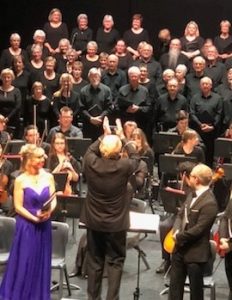 “An example is my experience with Opera Australia, which helped facilitate the development of a choral program at Emerson. Our students had the opportunity to work with the Opera Australia music director and touring company to eventually open for the Opera Australia tour of Puccini’s Madama Butterfly—a magical experience that brought Emerson students, families and staff together in a unique way.”
A key project in Margaret’s first year at Emerson was Singfest, a choral music event for school-aged children across several schools to celebrate both singing and collaboration. This event now occurs annually and has kickstarted a growing culture of inclusivity and inquisitiveness in relation to music.
The 2015 Singfest event inspired an award-winning documentary called Singfest – The Literacy of Music. The documentary was featured in a Herald Sun article in 2019, in which Emerson student Taleah Clay was quoted as saying: “The Singfest was one of the best days of my life.”
There are many opportunities for Emerson students to enjoy aspects of music—from the Opera Australia choral experience to drum or piano classes, from jamming sessions by current and even past students who return to rehearse, to dance sessions, to performing for the whole school community at school concerts.
One of the things Margaret loves best about working at Emerson is the energy and awareness students bring to the program, no matter their age or skill level. “The definition of success is about instilling confidence, gratification, affirmation, and a sense of identity and belonging. At Emerson, the music program delivers all of that and more.”
[interviewed March 2026]
Photo credits: Featured image supplied by Margaret Orr / Bottom image shows Margaret singing at the Opera.